Helmets
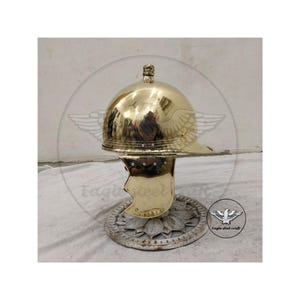
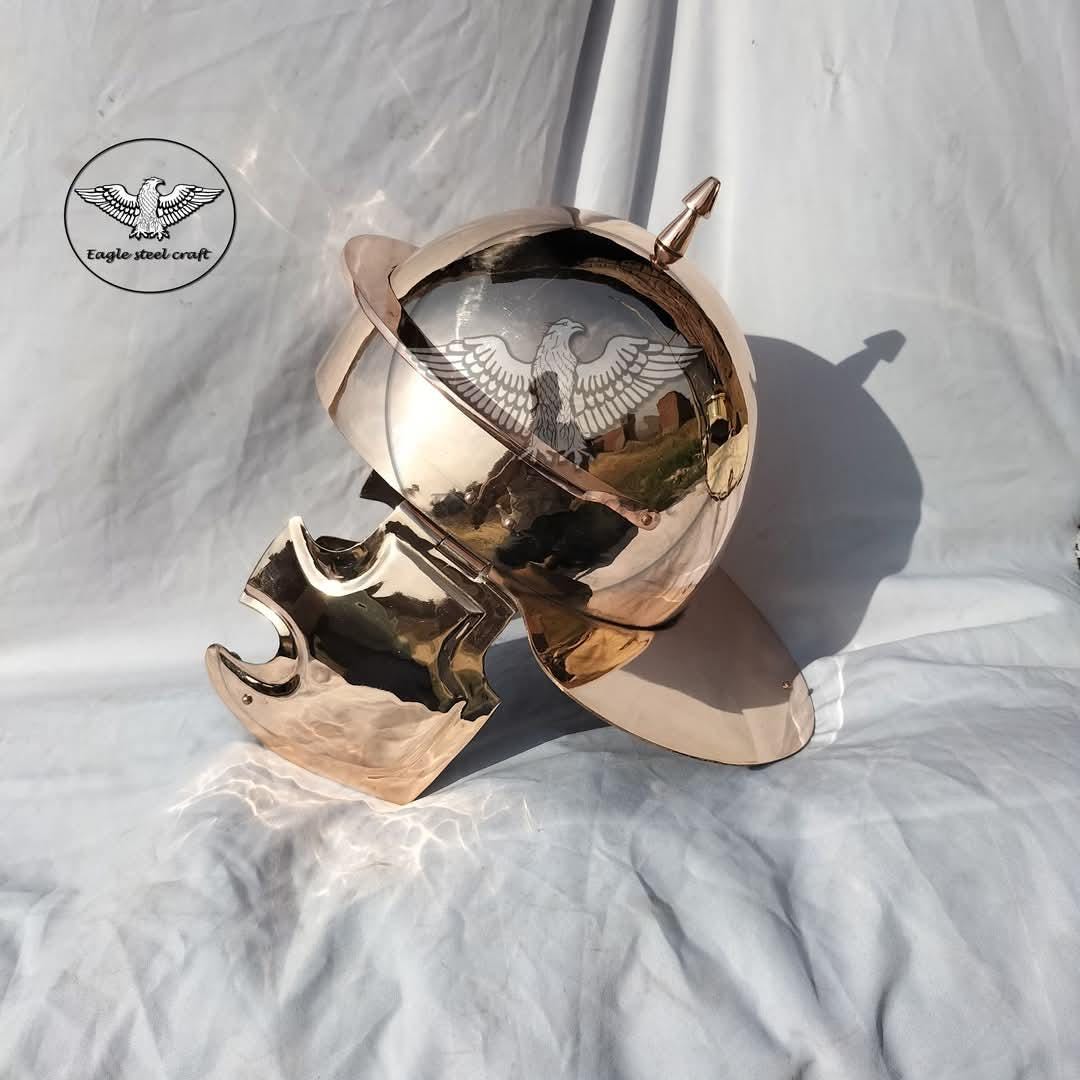
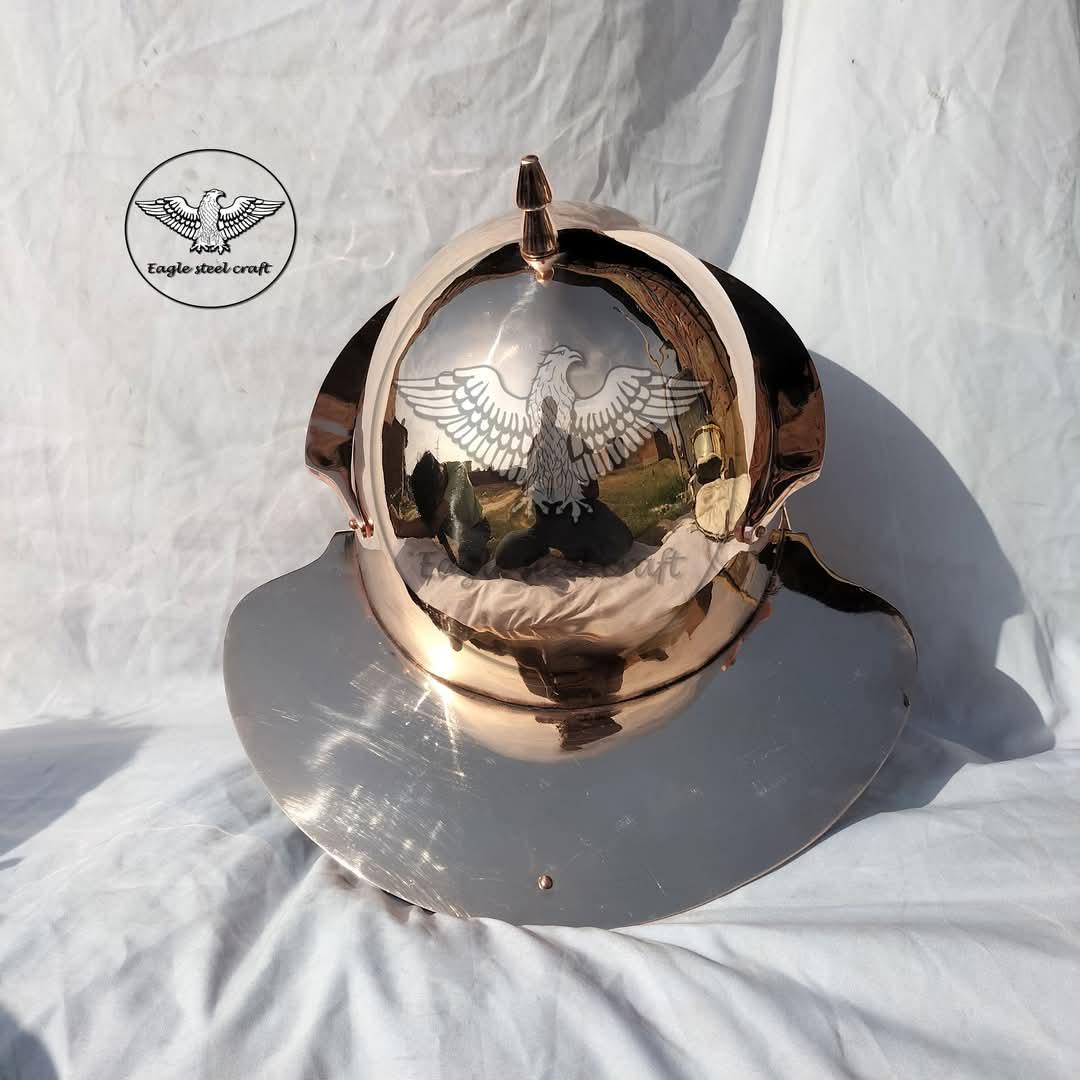
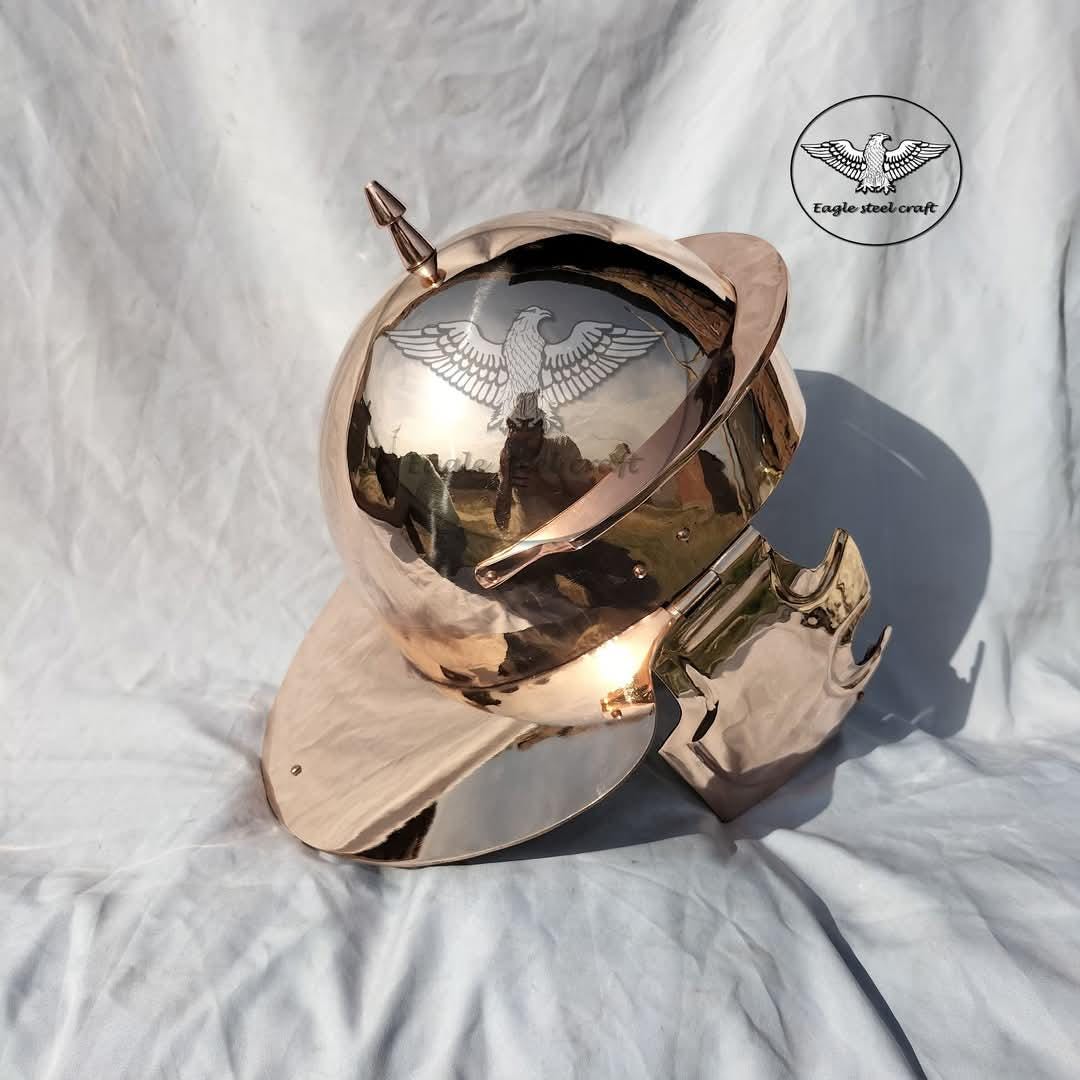
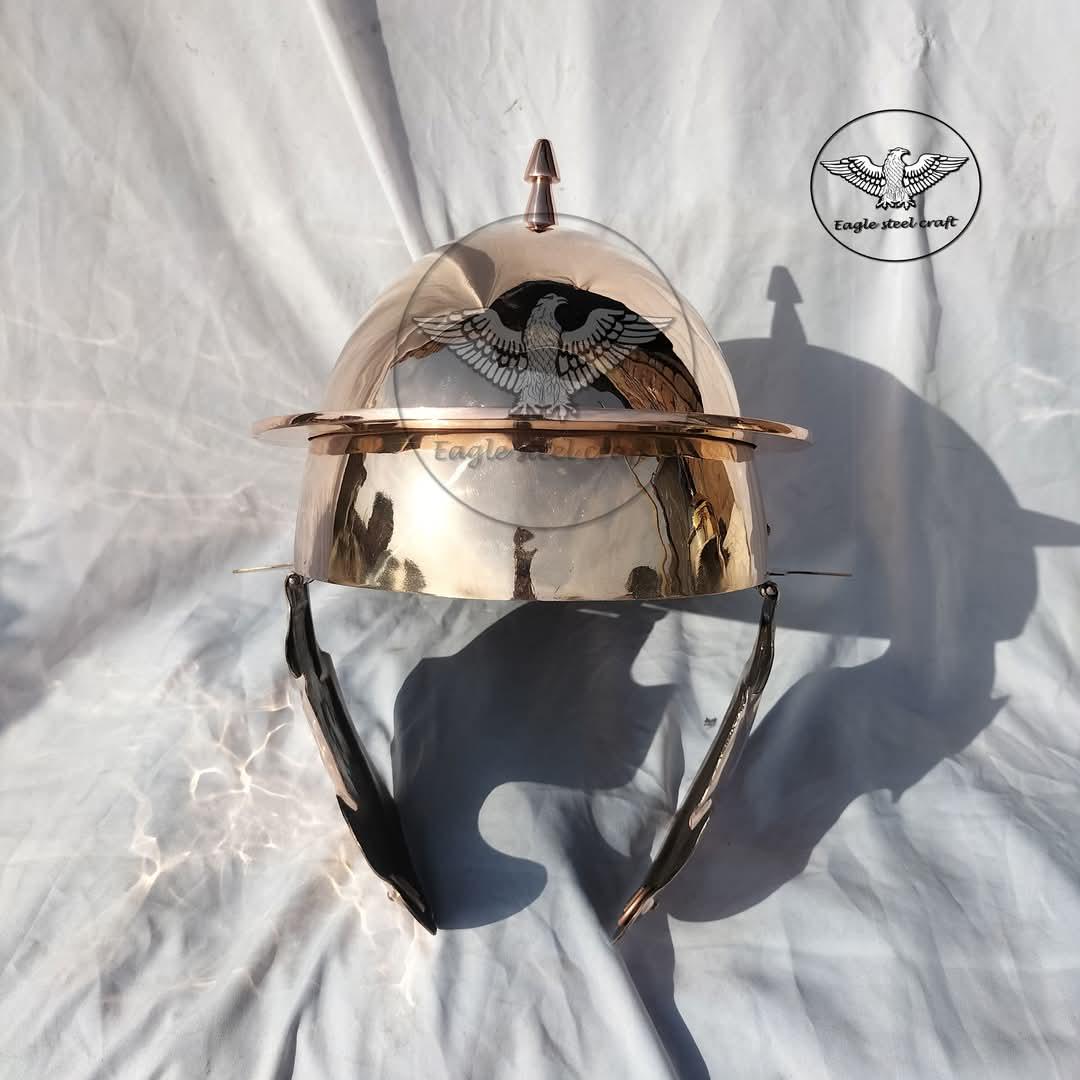
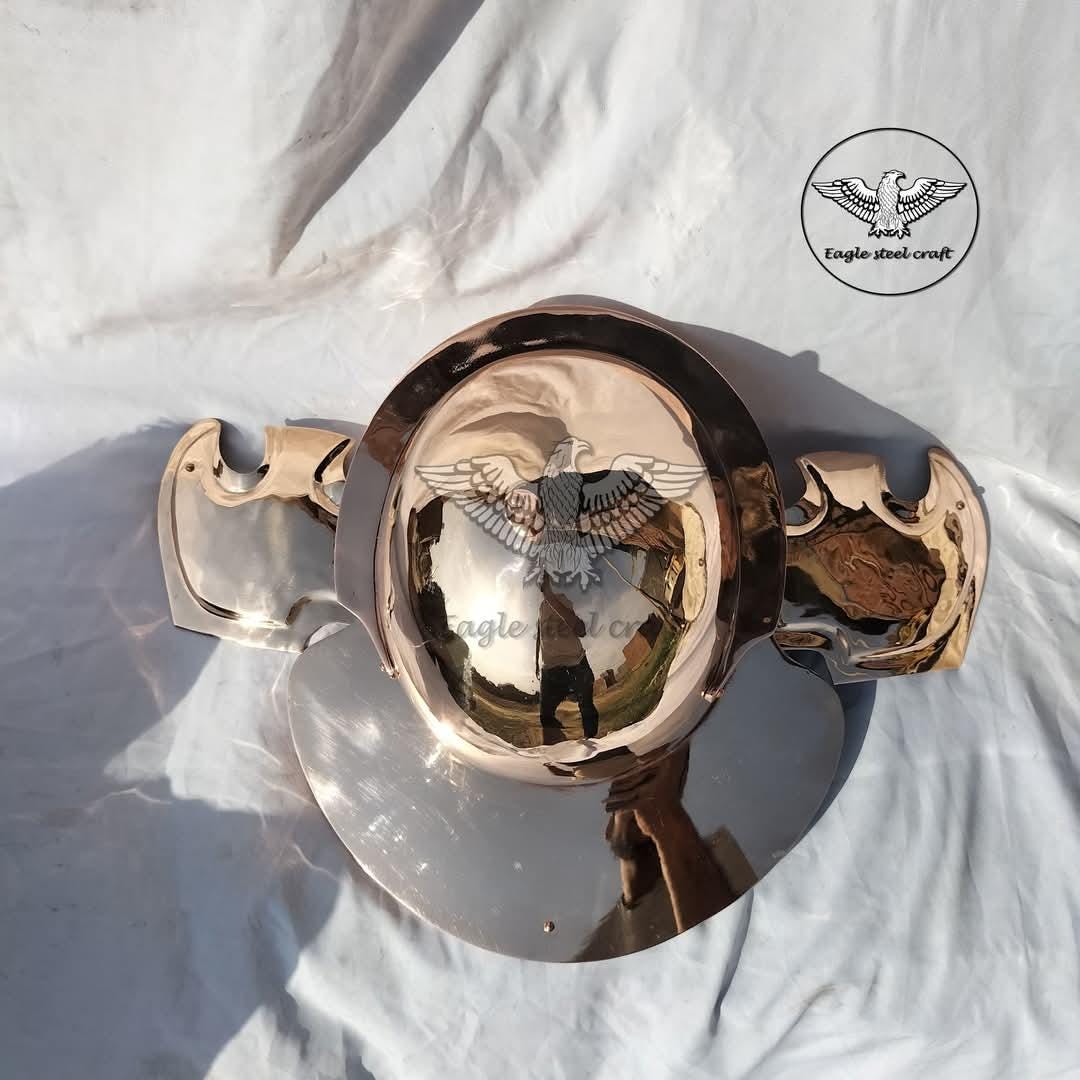
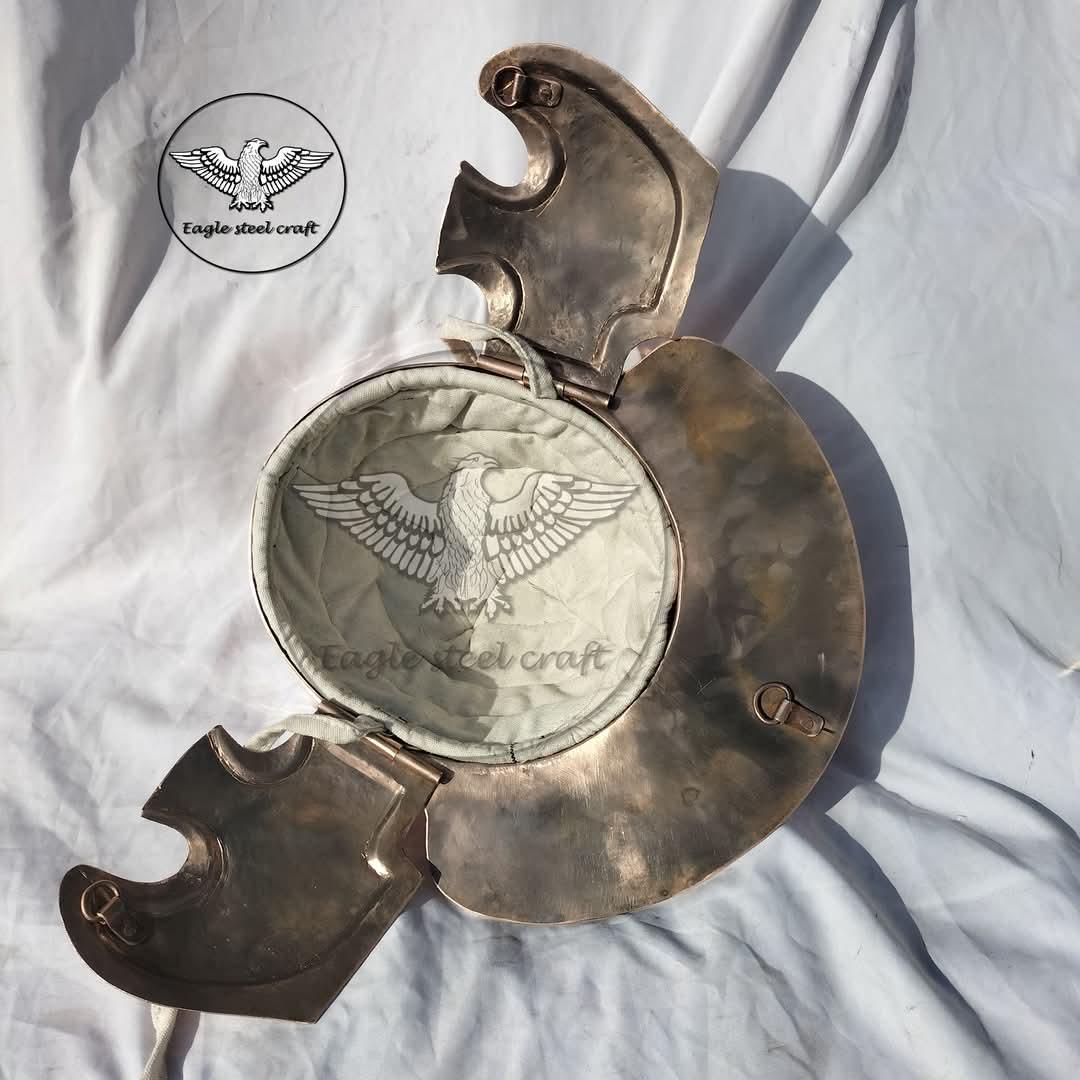
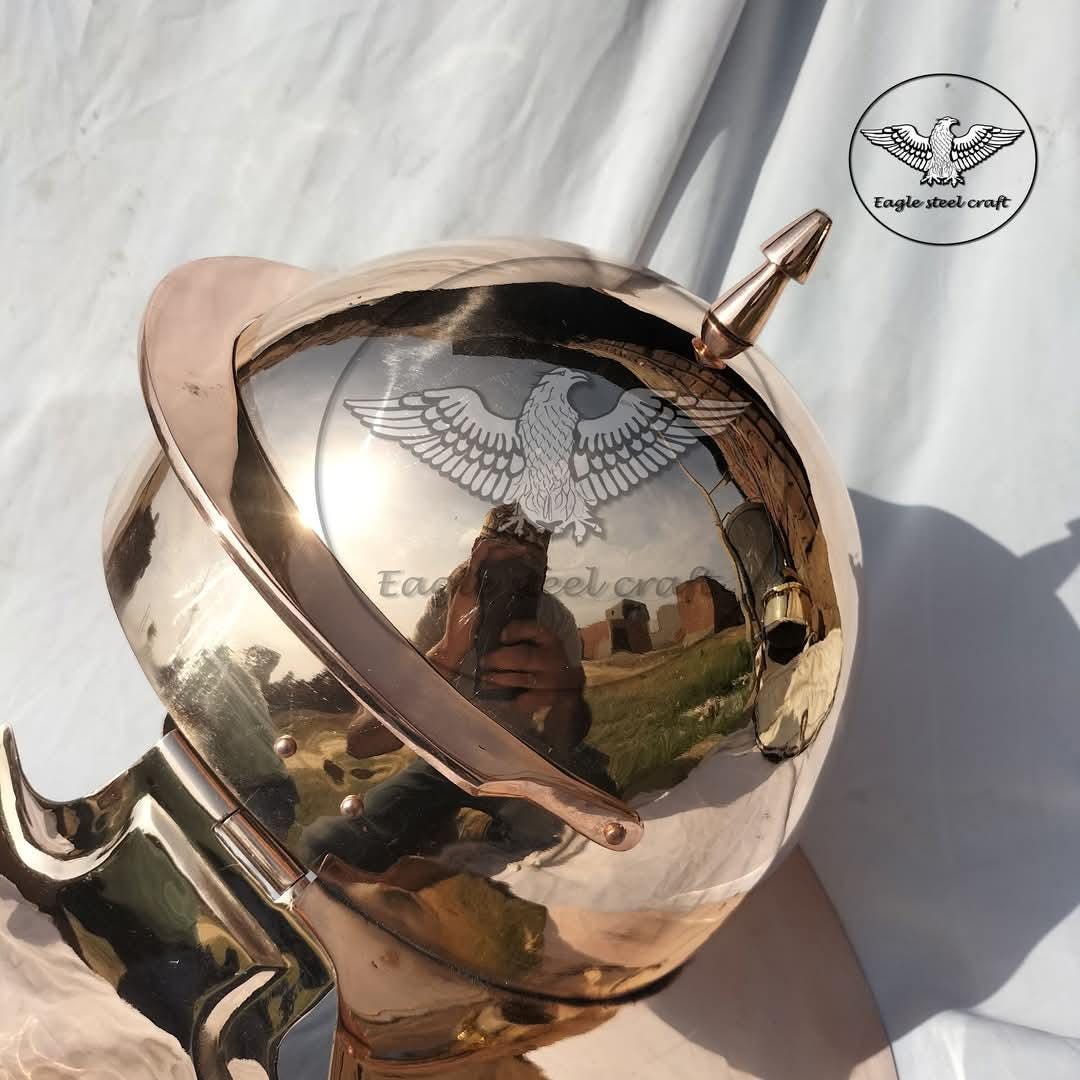
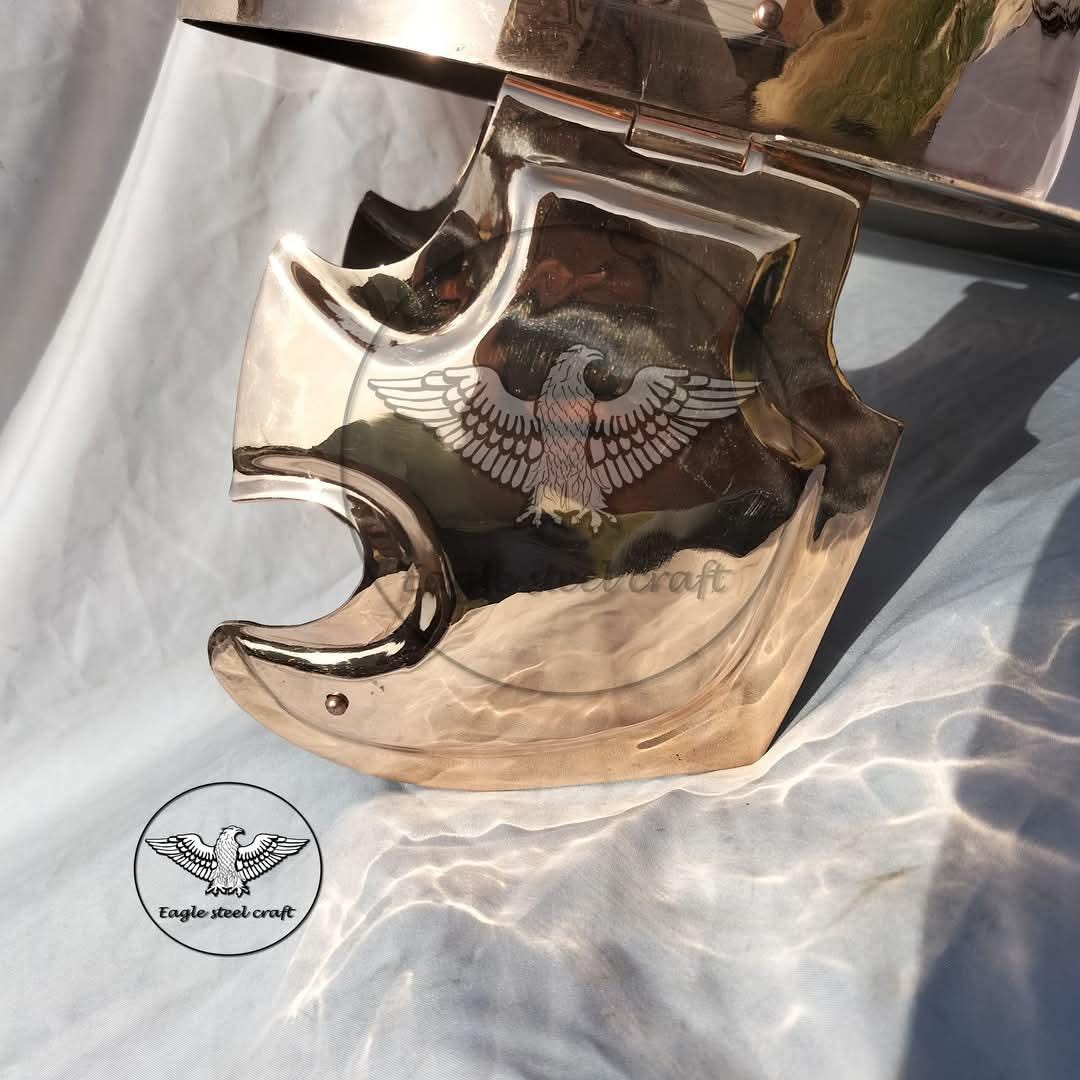
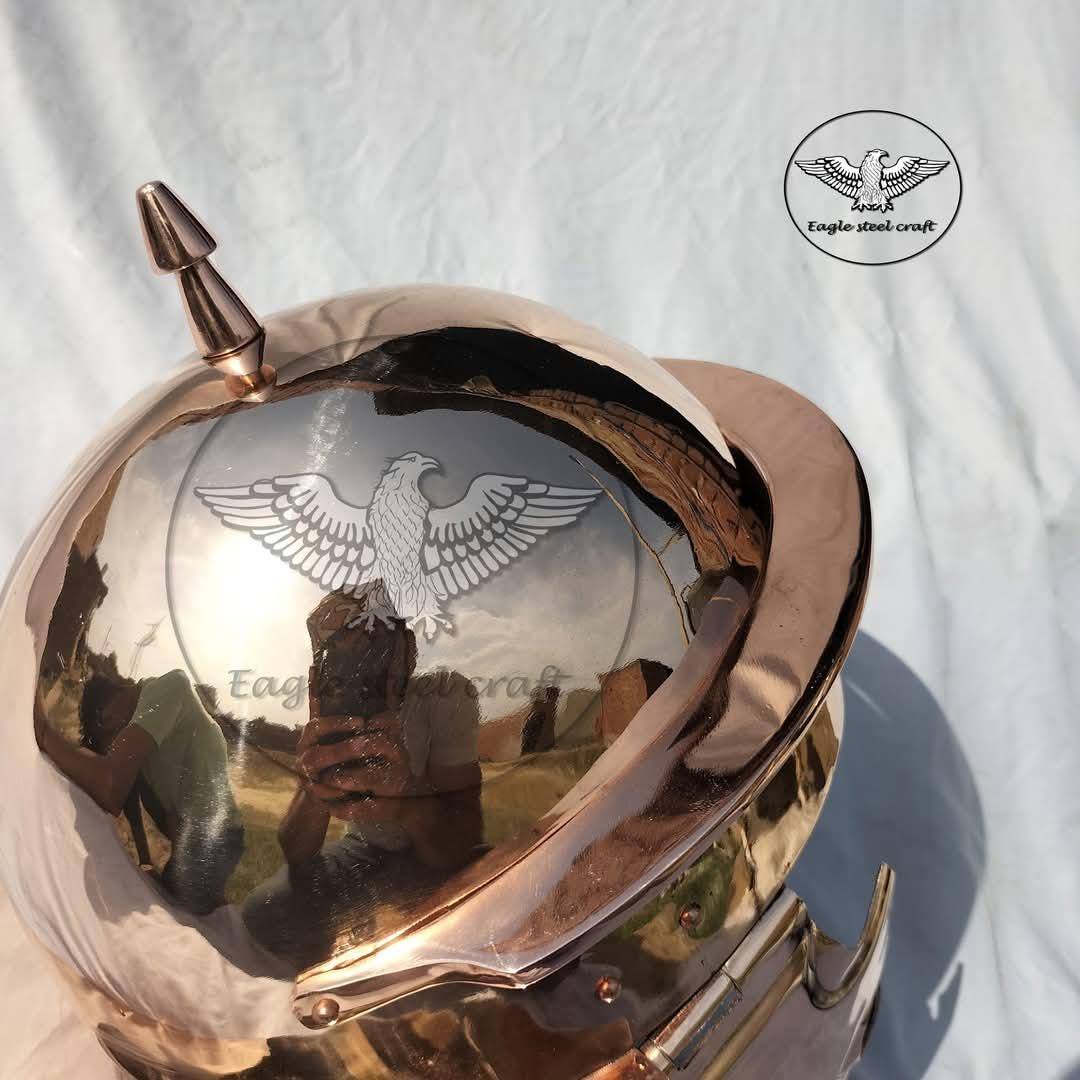
Bronze Roman Coolus G Helmet Replica – 1st Century A.D.
$320.00 $350.00
-
DetailsBronze replica of a Coolus G helmet – dated 1st century A.D. 1.5 mm thickness. Best Helmet Original Finding Collection Mother Day Gift
Bronze Coolus G Helmet hand-burnished
Material: bronze with a thickness of 1,5 mm
Origin: Bronze replica of a Coolus G helmet – dated 1st century A.D. and found in Drusenheim Alsace Germany – also mentioned in the book “Roman Helmets” written by H. Travis & J. Travis. The helmet was made with a 1.5 mm bronze plate. This type of helmet, like many others, was cataloged by R. Robinson with the letters: A, B, C, D, E, F, G, H, I; to distinguish the different types.
Made of two valves assembled with rivets, this type of helmet is almost in every example decorated with a series of bugnette and embossed dots.
The crest was originally designed to allow the junction of the two halves, developed as a decorative and protective element characteristic.
9th – 7th century BCE
The helmets in Ancient Greece, were made either of wood or metal; they first appeared in the 8th century BC and gradually evolved until the middle of the 5th century BC. They were used to protect the bearer's head during the war. Their top was decorated with a crest from horse tail. Herodotus states that this Armour (helmet) originated from the area of Corinth. The art of making it, was similar to the art of making metal utensils and thus required great skill. The Corinthian helmet is characteristic because it covered the entire head and neck with slots for the eyes and mouth, while it also had a paragnathus. The Ancient Greeks often decorated the helmets with the meander symbol as it symbolized -among other things- victory.
The Black Grave (Ukrainian: Чорна Могила, romanized: Chorna mohyla) is the largest burial mound (kurgan) in Chernihiv, Ukraine. It is part of the National Sanctuary of Ancient Chernihiv and is an Archaeological Monument of national importance.
During excavations undertaken in 1872–73, Dmitry Samokvasov uncovered two cremated bodies of Norse warriors (probably father and son), surrounded by slaves, sacrificial animals, arms, armour, and decorations. Samokvasov dated the burial to the late 10th century, when Vladimir I was the ruler of Kievan Rus. It is likely that the buried warriors were two princes (knyazes) of Chernihiv, although no local potentate is attested in the Slavonic chronicles before Vladimir's son, Mstislav of Chernihiv. -
Shipping & Policies
Related Products